Showing posts with label Joules. Show all posts

Monday, 17 December 2012

In the Mail: our favourite Christmas covers

It’s beginning to look a lot like Christmas in the Direct Commerce office. Our Christmas tree is up, we’ve decorated the windows with lights and we’re all looking forward to exchanging gifts in the office secret Santa.

We’ve also been admiring festive catalogues and website homepages, and here are my three favourites of Christmas 2012.

JoJo Mamam Bebe
Edition: Christmas 2012 Collection
Website: www.jojomamanbebe.co.uk
Format: 250mm x 212mm, 196pp, no order form
Special offer on the cover: yes, free delivery in the UK and Ireland
Addressing: polywrapped, address on back cover, mailing managed by OnePost
Range: maternity and baby wear, nursery products and toys
Delivery: Free
Why I picked it: While the saying goes, never work with children or animals, nursery specialist JoJo Maman Bebe has proved that putting an adorable child on your Christmas front cover is a winning tactic. It’s simple but effective. I love the colours, the lighting, the stars in the background, and of course, the star in the foreground.


Joules
Edition: Your Christmas Gift Guide
Website: www.joules.com
Format: 198mm x 146mm, 36pp, no order form
Special offer on the cover: yes, 3 for 2 on everything
Addressing: address on back cover, mailing managed by OnePost, delivered by Royal Mail
Range: clothing and accessories
Delivery: £1 for super saver, £3.95 standard delivery
Why I picked it: Everything about this catalogue is “on-brand”, from the colours of the wrapping paper, to the pink Joules wellies, to the strapline “Complete with all the trimmings”. This is the “good life” that Joules aspires to create and market. This is traditional Christmas, a Winter Wonderland. And did you notice it was “Your Christmas Gift Guide”? Those clever people at Joules certainly know how to “sell” Christmas.


Seasalt
Edition: Christmas Lights of Cornwall
Website: www.seasaltcornwall.co.uk
Format: 212mm x 147mm, 68pp, no order form
Special offer on the cover: no
Addressing: address on back cover, delivered by Royal Mail
Range: clothing and accessories
Delivery: £3.95 standard delivery, £8.50 for next-day delivery
Why I picked it: A relative newcomer to mail order, this is Seasalt’s first Christmas catalogue and we hail it a creative success. Seasalt trades on its Cornish heritage, so this catalogue has a suitably nautical feel to it: lobster pots, sailor socks, paper boats and anchor motifs. With no pushy sales messages, such as free delivery or 3 for 2 deals, Seasalt has taken the soft-sell approach. Apart from the company name and catalogue title, the only other text reads: Very pleasing gifts.--MT

Friday, 3 September 2010

August Catalogue Log

Last year, the fact that we received just 71 catalogues in August seemed unusual to us. But this year, receiving just 61 catalogues in August came as no surprise. We have been tracking a steady decline in catalogue volume during the last few months—the only anomaly being July, when sale activity boosted the number of catalogues to land on the Catalogue Log desk.

Comparing the catalogues received in August 2009 with those logged in August 2010, some titles that appear in both columns, such as Books Direct, House of Bruar and Scotts of Stow. There also seemed to be an almost equal number of new names this year to compensate for lists we have been dropped from. This further cements the theory that cataloguers are mailing smarter, removing unprofitable names from their files.

Cataloguers are also becoming smarter with their covers. We have been tracking how many catalogues highlight a sale or discount, free shipping, or a free gift on their covers since January 2009 and have noted an increasing trend of using the cover to promote some sort of offer. A staggering 65.6 percent of all the catalogues we received in August featured some sort of offer on the front cover—in July that figure was 64 percent and in June it was 60 percent. Among the minority of catalogues without a special offer were Brora, the Dolls House Emporium, and Lakeland.


The most popular offer in August was a sale or discount, promoted on 41 percent of the catalogue covers we logged. This is appreciably lower than July’s record high of 49.5 percent. Gaining favour with cataloguers in August was free delivery—the number of catalogues touting free shipping almost doubled from 12.1 percent in July to 23 percent in August. Catalogues offering free delivery included Bon Prix, Joules and Boden, which repeated its Sunday Times offer of last year—a 15 percent discount, free delivery, and free returns. We thought it made Boden look needy last year, but it obviously works or Boden wouldn’t have used it again.

The number of catalogues offering a free gift with purchase was 11.5 percent, down from 12.1 percent in July and from 14.1 percent in August 2009. Free gifts were mainly promoted by the b-to-b catalogues in the pack including Viking Direct and Neat Ideas.

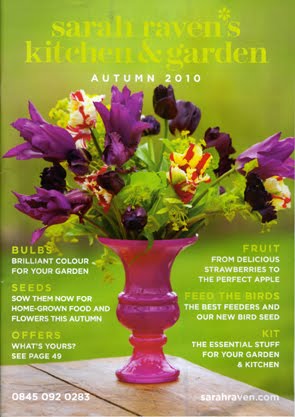
Our favourite offer of the month is from gardening catalogue Sarah Raven’s Kitchen & Garden. Among the messages on the cover was this: “Offers What’s yours? See page 49”. I thought it was a fun way to encourage customers to flick through the catalogue. It also had a sense of personalisation—did my catalogue have a different offer to my friend or neighbour’s? I’d like to think there was some sort of segmentation that went into deciding which offer to send to which tranche of the database. Let's put it to the test, I got 15 percent off. What did you get?--MT

Friday, 18 June 2010

Daddy or chips

Remember that advert for oven chips where Big Sister asks Little Sister which she loves most: “Daddy or chips?” Little sister thinks long and hard about the question and in the evening, as Daddy pinches a chip from Little Sister’s plate she concludes “chips…” Poor Daddy, he always gets a raw deal. So how are retailers combating it this Father’s Day?

As it’s predicted that we’ll spend more on Father’s Day this year—Verdict estimates that Brits will spend £771 million preparing for 20th June this year—I wanted to analyse what sort of offers retailers were promoting in order to get us to part with our cash and treat our dads. In a rather unscientific (and random) way I picked 12 emails that landed in my inbox with reference to Father’s Day.

Only one of those emails, sent on 16th June from gifts cataloguer Lily & Lime, promoted a free gift-wrapping service. It was also in the minority of emails that promoted free shipping. Of those that did offer free delivery, Direct Golf set a £10 threshold, whilst vitamins and supplements marketer Trust William wanted me to spend £30 to qualify for free delivery. Considering that Trust Williams’ main Father’s Day offer was a £15 shaving pack, I thought it was a bit mean that I had to spend twice as much to enjoy free shipping. What’s more, when I visited the website I couldn’t find any information about how much delivery would cost. That’s something Trust William should probably look to rectify.

Out of 12 emails, only three were overtly price-driven. Direct Golf had the biggest price-related promotion. It featured a variety or price points: From golf balls for £19.99 to a putter that was reduced by £109 to £60. Personally I feel more could have been made of the high-end gifts, for example, a GPS golf device worth £329 and premium golf shoes at £90 were subtitled “Luxury Gifts - For That Extra Special Dad!”, but the images were much smaller than the main offer. Why?

Gifts and gadgets etailer I Want One of Those is another that went straight for my wallet. Its email on 2nd June promoted a 50 percent off sale, though its “IWOOT Top Six for Father’s Day” were not in the sale. This email was choc-full of offers and promotions. There was a competition to win a mini helicopter if email subscribers wrote in with tales of their embarrassing dads; there were videos to watch, and 25 percent off photo gifts.

Speaking of videos, that’s the tactic Marks & Spencer went for. Its robust email directed customers to its Father’s Day video featuring former footballer Jamie Redknapp, it also set up a dedicated Father’s Day shop on its website where all the items featured in the email could be found. The email itself promoted wine, strawberries, gifts in all price points, personalised cards… but no discount or free delivery. M&S is obviously hoping we love Daddy more than chips.

Of the other emails I looked at, Joules stood out with the most eye-catching email. It proudly promoted the “Father’s Day Gift of a Lifetime”. Indeed the offer looks great--a day’s sailing for Dad and eight family members or friends on a 60ft yacht. I was least impressed with Natural Collection, which in addition to making Dad share the email with The Fat Bird (a type of bird feeder before you ask), got the day wrong! It had the date as Sunday 21st June—as one famous Dad would say, “D’oh!”--MT


Friday, 4 June 2010

Off-topic but on target

This week I chaired a Q&A session at Onepost’s Ask the Expert event. During the session, in a segment about social media, one of the delegates asked whether it was “acceptable” to blog about his personal hobbies and interests—such as posting poems, or favourite recipes—on his company’s blog. The consensus at the table was that he should steer clear of off-topic posts. After all, the amount of information all of us have to consume on a daily basis is so vast (according to one speaker, a week’s worth of New York Times content is more information than a person living in the 18th century would consume in his lifetime), that it is probably best to stick to what your audience, or rather potential audience, is expecting from you.

Nigel Cliffe of Cliffe Associates said potential customers could find it a turn off to read more personal blog posts. As the delegate was a director of a business-to-business company selling niche educational supplies, his customers were buying for business, rather than pleasure. Blogging about the founder’s daily life, therefore, may not be of interest to readers. If there are too many posts that appear irrelevant, Cliffe warned that readers eventually will tune out. They will miss the posts that are of interest; those that drive brand awareness and ultimately, sales.

On the train home (which was running late, so I had plenty of time to think it through) I began to wonder whether off-topic blog posts could work for that delegate’s business. Take Hush for example. The loungewear cataloguer has built its brand on recommending books, hotels, and even chocolate brownies in its enewsletter, catalogue, and customer magazine. According to founder Mandy Watkins, this tactic works. She sees an uplift in sales after each email broadcast and at the trade fairs she exhibits, customer feedback usually centres on how much they love Hush’s newsletter because it offers them something different.

Another business is Joules. This cataloguer/retailer, which has its roots in the equestrian market, has built its brand around the strapline “Living the good life”. Its blog is full of stories of pancake races and updates from the Joules vegetable patch. These editorial features have seemingly little to do with selling clothes, but here and there you’ll find news of store openings, and dates for upcoming shows where customers can meet the Joules team face-to-face.

Then of course, there’s Boden. A brand built around the founder’s personality. But all of these examples are from consumer catalogues, not business-to-business merchants. The trick, as always, is knowing your audience. For the delegate at yesterday’s event a more personal approach could work, if done right. He is a former teacher and now sells supplies to special-needs teachers; posting a poem that is a play on words for example, could then be used as a classroom teaching aid. Or posting a recipe, provided that it is child-friendly, could be used by a teacher overseeing an after-school club. In short, off-topic posts may not be as random as they first appear.

In order to get the balance right between off-topic and more directly sales-oriented, all the experts recommend testing. If you are a b-to-b cataloguer, your customers probably signed up to receive your enewsletters or RSS feeds of your blog posts because what you are saying is directly relevant to their businesses. They want good deals, latest product news, and updates about the sector they are working in. They might not want to hear about your daughter’s recent violin recital, or your son’s winning goal at the weekend’s under-11s football match. Check your stats to see which posts or enewsletters are getting the most visitors, or what your customers are searching for on your website and provide more of what they are looking for. If you are still not fulfilled by only writing a personal blog once in a blue moon, perhaps you should set up a personal account and say whatever you like.—MT

Monday, 8 June 2009

Monday morning musings


* The MP expenses scandal has hit fashion cataloguer/retailer Joules: "Joules has been rocked to its core by the news that Tom Joule, MD and amateur chicken keeper, claimed expenses on a second chicken coop whilst his primary chicken coop was at the time being sublet to a Buff Plymouth Rock Bantam named Theresa." So reads an article in a mock scandal sheet that Joules posted on its site and emailed to subscribers. Joules uses this to promote a contest to win the chicken coop in question as well as a 15-percent-off sale, but just as important, the promotion communicates the brand's country-living ethos and sense of fun.

* An article in the Sunday Times refutes the philosophy, which I've been hearing more mutterings of lately, that print catalogues are dying at the hands of the web. In discussing Argos parent company Home Retail Group, which is expected to report decent quarterly sales this week, the article notes, "The internet was supposed to kill off Argos with its store showroom and catalogue model. Instead, the web has turned out to be its saviour. More than a fifth of its sales are now online – many web customers check stock availability and reserve and pay for products on the net before picking up the items." Granted, this doesn't speak to the viability of print per se, but it does point to the fact that when it comes to marketing media and sales channels, the whole is greater than the sum of its parts.

* Primrose London, a direct marketer of garden furnishings, also understands the synergies of multichannel marketing. On the catalogue request page of its website, it doesn't discourage consumers from asking for a print brochure, as so many other companies do. It does, however, explain the advantages and disadvantages of print versus web: "Our catalogue is a 32-page brochure with a selection of the wide range of products we sell. It's a great way to get inspiration for the garden in a more relaxing fashion than browsing the website. However, printing costs are huge so the website will always be more up-to-date than the catalogue. (In other words, the catalogue doesn't contain more information than the website - it's not a technical brochure, nor is it a complete listing of everything we sell. Please refer to the website for the latest prices and products – and please don't rely on information in the catalogue which may now be out of date.)"

* According to yesterday's Observer, Sacha Baron Cohen did some catalogue modelling after leaving Cambridge. Does anyone know whom he worked for or, even better, have the pictures? It would be an appropriate tie-in to his upcoming Bruno film, no?--SC